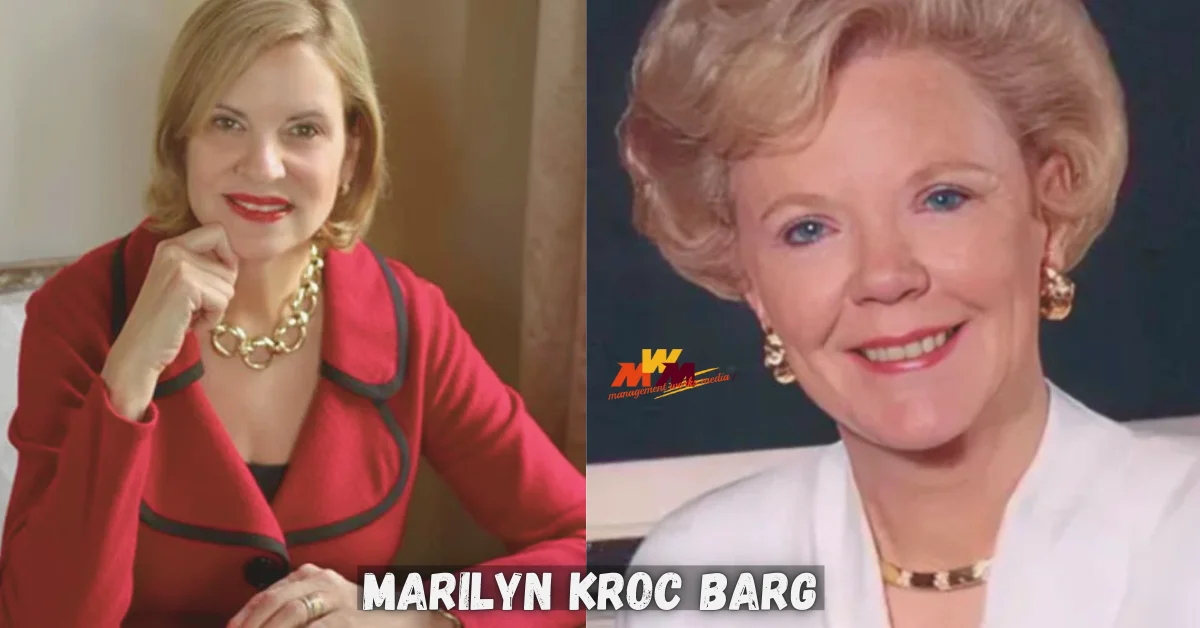
When most people think of McDonald’s, the first names that come to mind are Ray Kroc or the McDonald brothers who started it all. Yet, behind Marilyn Kroc Barg the golden arches and global empire lies a quieter story — one that belongs to Marilyn Kroc Barg, the only child of Ray Kroc. While her father became synonymous with the fast-food revolution, Marilyn lived a life that, though largely private, reflected compassion, intelligence, and a subtle strength that often goes unnoticed in business lore. Her story isn’t about building an empire but about being the daughter of a man who did — and finding her own meaning within that shadow.
Early Life: Growing Up with Ambition All Around
Marilyn Kroc Barg was born in 1924 in the United States, into a world where success and ambition already ran deep in her family’s veins. Her father, Ray Kroc, was not yet the fast-food titan we know today. At that time, he was a young and ambitious salesman, trying to make ends meet by selling paper cups and milkshake machines. Her mother, Ethel Fleming, was Ray’s first wife, and she provided the stability and warmth that balanced Ray’s restless entrepreneurial energy.
Growing up in the early 20th century wasn’t easy, especially during the Great Depression era. Yet Marilyn’s childhood was one of modest comfort. She wasn’t born into wealth — McDonald’s, after all, hadn’t yet become a global phenomenon. Instead, Marilyn experienced firsthand what it meant to watch her father chase big dreams through failures and uncertain beginnings. This environment shaped her into someone with patience, humility, and deep empathy for people who worked hard for what they had.
As Ray Kroc’s career began to take off with the founding of McDonald’s in the 1950s, Marilyn was already an adult. She witnessed her father’s relentless pursuit of perfection, his obsession with consistency, and his belief that anyone — regardless of background — could succeed with discipline and hard work. This philosophy deeply influenced Marilyn, but unlike her father, she preferred a quieter, more personal form of contribution to society rather than being in the public eye.
Family Background: The Kroc Legacy and Its Impact
The Kroc name carries enormous weight, thanks to Ray’s global vision for McDonald’s. But behind the brand’s commercial success was a family that experienced both triumph and tension. Marilyn Kroc Barg’s relationship with her father was reportedly warm but complex. Ray was often consumed by his work and ambitions, which sometimes created emotional distance in his personal life.
Despite that, Marilyn remained proud of her father’s accomplishments. She admired his ability to turn a simple hamburger stand into an international empire. What’s often overlooked, however, is how much she valued the human side of that success — the jobs created, the opportunities provided to ordinary people, and the communities that thrived because of the brand’s global reach.
While Ray Kroc’s name became synonymous with innovation and business success, Marilyn represented the heart of the family legacy. She wasn’t interested in corporate dominance but rather in ensuring that wealth and power were used meaningfully. It’s said that her influence quietly guided the more philanthropic side of the Kroc family — something that her stepmother, Joan Kroc, would later embody through her extraordinary charitable giving.
Education and Early Interests: A Life Rooted in Curiosity
Unlike many heirs to family fortunes, Marilyn was known for her intelligence and genuine curiosity about the world. She wasn’t someone who simply lived off her father’s success. Instead, she sought to understand how people lived, worked, and connected. She was drawn to education, the arts, and community service, interests that reflected her balanced personality and compassionate worldview.
Marilyn’s education details aren’t widely documented, which adds to her air of mystery. However, given her background, it’s likely she received a quality education that allowed her to explore a range of interests — from literature and art to social causes. What stands out most is how she never allowed her father’s fame to define her identity. She believed in living authentically, in keeping one’s values grounded even amid wealth.
During her early adult years, Marilyn didn’t pursue a flashy career in the McDonald’s corporation or leverage her family name for fame. Instead, she led a life that balanced personal growth with community involvement. Her personality, by most accounts, was warm, gracious, and genuinely kind — a reflection of someone who valued purpose over prestige.
Marriage and Personal Life: Love, Privacy, and Inner Strength
Marilyn Kroc later became Marilyn Kroc Barg after marrying Sylvester Barg, a man who shared her appreciation for privacy and simple living. The couple maintained a low profile, preferring to focus on their relationship and personal happiness rather than the spotlight that came with her father’s fame.
Their marriage was one of mutual respect and quiet companionship. While much of Marilyn’s personal life remains private, it’s known that she balanced her roles as a wife and a daughter of one of America’s most successful businessmen with grace and poise. She was supportive of her father but never overly dependent on his achievements. That independence defined her character.
In an era when women were often defined by the men in their lives, Marilyn’s ability to maintain her individuality was impressive. She wasn’t known for scandal or extravagant behavior — instead, she represented an understated elegance that many admired but few could emulate. Her sense of dignity and discretion made her an enduring figure among those who knew her personally.
Life Beyond McDonald’s: Compassion and Community Involvement
Though Marilyn Kroc Barg didn’t play a direct role in McDonald’s corporate expansion, her outlook on life reflected many of the brand’s core values — community, accessibility, and optimism. However, she channeled those ideals into more personal acts of kindness and quiet philanthropy rather than business ventures.
She was deeply empathetic toward people struggling with illness and hardship, a trait that foreshadowed her father’s later philanthropic efforts. Marilyn’s perspective on success wasn’t limited to financial gain — she believed that true success meant improving the lives of others. This mindset likely inspired her stepmother Joan Kroc, who became one of America’s greatest philanthropists, donating billions to causes like peace studies, the arts, and disaster relief.
Marilyn’s influence, though understated, may have laid the emotional groundwork for that kind of generosity. She showed that compassion didn’t always have to be loud or public — it could be quiet, personal, and deeply meaningful.
Tragic Turn: Marilyn Kroc Barg’s Battle with Illness
Despite her graceful approach to life, Marilyn’s story took a heartbreaking turn. In 1973, she passed away at the age of 48 due to complications from diabetes. Her death was a painful blow to Ray Kroc, who was by then one of the wealthiest and most recognized businessmen in America.
Her passing at such a young age highlighted the fragility of life — even for those who seem to have everything. Ray Kroc was deeply affected by her death, and it’s said that this loss profoundly influenced his later years. After Marilyn’s passing, Ray’s focus began to shift more toward philanthropy, as though he sought to honor his daughter’s spirit through giving back.
Diabetes, in the 1970s, was a much less manageable disease than it is today. Marilyn’s struggle with the illness was reportedly difficult, yet she faced it with quiet resilience. Her untimely death was a reminder that behind every powerful family name lies a deeply human story — one filled with challenges, emotions, and loss.
Ray Kroc’s Reaction: A Father’s Love and Regret
For Ray Kroc, the death of his only daughter was an emotional wound that never fully healed. Though he had achieved immense success with McDonald’s, Marilyn’s passing reportedly brought him a sense of emptiness that money could not fill. It reminded him of what truly mattered — family, compassion, and humanity.
In the years following her death, Ray became increasingly charitable, donating millions to hospitals, educational causes, and humanitarian projects. While some attribute this shift to his second wife Joan, others believe it was Marilyn’s memory that softened him and redirected his focus.
Ray Kroc often spoke about hard work, ambition, and perseverance, but Marilyn’s loss taught him something different — that life’s greatest rewards come from love, not just legacy. Many close to him noticed that after Marilyn’s death, he carried himself with more humility and a deeper appreciation for people, not profits.
Legacy: A Subtle Yet Profound Influence
Though Marilyn Kroc Barg’s life was short, her legacy endures through the values she embodied and the people she inspired. Unlike her father, she never sought to make headlines. But in her quiet way, she influenced one of the most iconic families in American business history.
Her compassion and thoughtfulness helped shape the philanthropic identity of the Kroc family. Today, the Kroc Foundation and various charitable programs supported by McDonald’s owe much to the ethos that Marilyn represented — a belief in improving lives beyond the business world.
In many ways, Marilyn symbolizes the “heart” of the McDonald’s story. While Ray Kroc built the brand, Marilyn embodied the humanity behind it. Her life reminds us that success is not measured only in wealth or recognition, but also in kindness, humility, and the ability to touch others’ lives in quiet but powerful ways.
Remembering Marilyn Kroc Barg Today
Though decades have passed since Marilyn’s death, her name continues to resonate with those who study the history of McDonald’s and the Kroc family. She may not have been in the spotlight, but her story provides an intimate look at what it means to live in the shadow of greatness — and still remain authentic.
In an age obsessed with fame and visibility, Marilyn’s life is a refreshing reminder that privacy and purpose can coexist. She lived without fanfare, yet her influence continues through the charitable spirit that defines the Kroc legacy today.
It’s also worth noting that many of McDonald’s most enduring initiatives — such as the Ronald McDonald House Charities, which provides housing and care for families of sick children — reflect the very values Marilyn held dear: compassion, community, and care. Whether directly or indirectly, her life helped nurture a culture of giving that still shapes the company’s humanitarian outreach.
Conclusion: The Unsung Heiress Who Defined Grace
Marilyn Kroc Barg’s story is not one of fame or fortune, but of quiet integrity. She lived during a time when her father’s achievements were transforming American culture, yet she never sought attention or recognition. Instead, she led with empathy, intelligence, and quiet strength — qualities that continue to inspire anyone who learns about her.