The increasing elderly population of the world presents an immediate opportunity to rethink how to approach health care, safety, and independence. The advent of IoT (Internet of Things) technologies represents a new chapter for the elderly care market with the potential to augment the quality of life, improve health management, and alleviate pressures on caregivers and the health system. Intelligent IoT technologies combine connected sensors, devices, and home automation systems into connected ecosystems of support that can be utilized in the homes or within supported-living facilities.
Partnering with an IoT Development Company focused on this domain makes it possible for healthcare providers, developers or administrators of care facilities to develop successful and intuitive IoT designs that meet the needs of older clients. These designs can provide independence and safety, plus timely responses to medical crises, and, in essence, set the stage for intelligent elder care of the future.
Understanding IoT in Elderly Care
The Internet of Things in elder care is a vast ecosystem of connected devices and intelligent applications that continuously track health, behavior, and home context. The ecosystem spans from wearables (e.g., medical trackers) to fall detection sensors, voice-activated assistants, and automated controls for lighting or climate. All of the devices’ data are processed, visualized, and ultimately used for timely intervention, routine management, and personalization of experience.
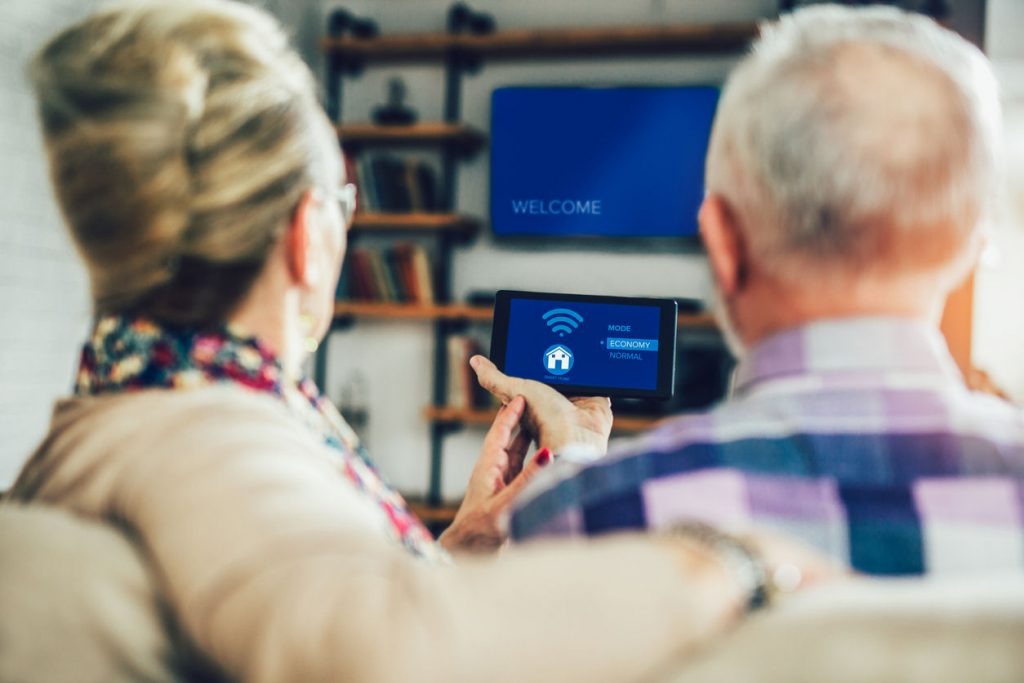
Smart home technologies, adaptable living situations, and telehealth or remote care systems are of increasing importance in assisting independent living among older adults, while also providing for some level of ongoing monitoring and oversight in assisted living situations. This model of care that is mediated through technology offers older adults, family members, and friends an opportunity to experience dignity, convenience, and peace of mind that is unprecedented.
Key Components of IoT-Enabled Elderly Care Environments
1. Wearable Devices and Health Trackers
Smartwatches, fitness monitors, and medical sensors provide real-time monitoring of biostatistics that can include blood pressure, heart rate, fall risk, blood sugar levels, and overall activity levels. These devices can be configured to detect small physiological differences, deviations, or fluctuations that can generate alerts to caregivers.
2. Home Automation Systems
Smart homes with IoT have automated lighting and temperature control, automated door locks, automated window shades and kitchen appliances, and automated utility management systems. Systems can be customized to personal preferences, routines or needs that are related to safety. Automated lighting has the potential to reduce fall risk, motion sensors assist with adjusting the environment quickly and voice controls can empower those living with limited mobility.
3. Emergency Detection and Response Solutions
Smart sensors can detect falls, smoke, gas leaks, and other threats, and alert the caregiver and emergency responders in real time as applicable. GPS monitors can offer geofencing and tracking information to increase safety and security in the home and on assisted living campuses.
4. Medication Adherence Systems
Smart pill dispensing systems, reminders, and connected medication databases can help older adults take medications in a more timely manner, and can even re-order medications when current supplies have run out. Smart sensors and apps can generate reminders to take medications, and escalate notification to caregivers if medications have not been taken within a timely manner to provide a plan for intervention.
Healthcare IoT Solutions in Smart Homes and Assisted Living
The modern elderly care system is being transformed with sophisticated Healthcare IoT Solutions that emphasize interoperability, data security, and personalized care in support of independent or facility-based living:
- Remote Health Monitoring Platforms: Sensors and cloud dashboards enable caregivers and clinicians to remotely monitor health status without having to be physically present, with real-time accountability. Changes in health status will trigger intervention when necessary, and even routine management is greatly simplified.
- Predictive Analytics and AI: Algorithms analyze massive amounts of sensor data to determine patterns, forecast potential health crises, and provide recommendations for prevention measures. For example, analytics can detect walking abnormalities a week before a fall occurs, and/or flag a clinician that sleep quality has deteriorated.
- Voice-Activated Smart Environments: Platforms like Amazon Alexa or Google Home, paired with IoT, allow for hands-free management for seniors over the functional aspects of their home environment and access to care services, all of which enables a better living environment for many disabled individuals
- Interoperability and Integration: Using standardized protocols (Bluetooth, Wi-Fi, Zigbee), Healthcare IoT Solutions provide assurance that a variety of devices, systems will be approved for interoperability, fostering the ability to scale and upgrade.
- Cloud Security and Privacy Controls: Cybersecurity and privacy features will protect sensitive health data, evidence of behavior change, while protecting one’s compliance with HIPAA and GDPR .
Real-World Applications of IoT in Elderly Care
Remote Health Monitoring
Wearable sensors monitor vitals, activity, and sleep on a continuous basis and data streams are securely transmitted to doctors or caregivers. As a result, risks can be detected early, and necessary interventions can occur. For example, falling blood pressures or abnormal rhythms will automatically trigger emergency calls to the appropriate service.
Automated Comfort
Smart thermostats and lighting systems enable optimal conditions based on daily routines and environmental sensors.
Fall Prevention
Motion sensors, accelerometers, and AI analytics collaborate to detect falls, forecast unsteadiness, and advise the user to pause or seek help.
Intelligent medication management
IoT pill boxes and dispensers monitor medication intake, remind patients about a dosage, and monitor supply.
Social well-being and telepresence
IoT companion robots, video calling apps, and cognitive games keep seniors cognitively engaged, provide reminders, and facilitate conversations with family.
Benefits of IoT in Elderly Care
- Encourages Independence: Seniors can safely and autonomously carry out daily activities for a longer duration before transitioning to institutionalized care.
- Increases Safety: Automated alerts and monitoring, and preventive systems will be proactive to reduce slip and fall accidents and increase response time in matters of emergencies.
- Decreases Healthcare Costs: Using telehealth monitoring and management will reduce unnecessary and avoidable ER visits, while increasing utilization of emergency resources at scale.
- Promotes Family and Caregiver Involvement: Sharing data and continuously engaging family members allows them to stay informed about the health and wellbeing of their loved ones.
- Enhances Mental and Social Health: Using communication technologies with family and companions improves emotional wellbeing and cognitive engagement.
- Strengthens Preventive Care: Predictive analysis and monitoring health allows health professionals to assess risk and intervene early as needed, improving health outcomes.
Challenges and Ethical Considerations
Despite several benefits, there are a number of issues that need to be taken care of as well. Check it out:
- Data Privacy and Security: We need to protect sensitive personal data and health information from breaches and misuse.
- Technology Adoption and Accessibility: Comfort and performance levels can vary with seniors on devices or interfaces with which they are unfamiliar. Solutions need to be intuitive, user-friendly, and accommodate various levels of digital literacy.
- Integration and Interoperability: Using and testing standards requires ongoing standardization and testing to ensure its applicability across different platforms and devices.
- Affordability and Scalability: Costs need to be kept manageable to facilitate access to IoT care models for all economic levels and facility sizes.
- Ethical Use and Autonomy: Monitoring autonomously should support rather than intrude, preserving dignity and privacy while supporting function.
The Future of IoT-Enabled Elderly Care
- Machine learning models may create tailored care plans that take into account the individual’s goals and health status.
- Virtual or augmented reality applications have the potential to assist older adults with pain management, socialization, cognitive health and other functions that are part of the smart home.
- Utilizing a blockchain framework allows health records to be shared among relevant stakeholders in a secure and auditable manner.
- Edge computing will allow for quicker, more localized analysis of sensor data empowering the user to receive more timely feedback.
Final Thoughts
IoT is revolutionizing elderly care through smart homes and new generation assisted living communities representing the shift from reactive to proactive, data-driven care while enhancing independence. Robust Healthcare IoT Solutions will be key to ensuring interoperability, security, and personalization across care environments. In this context, healthcare providers and facility management are engaging more and more with IT Services firms with integrated Software Development Services to have scalable internet of things capability and together advance innovation, engagement, and peace of mind.
As technology advances, so does the vision for elder care: an aging experience that is safe, connected, and dignified with the help of intelligent IoT solutions that will care and change with the individual along the way.