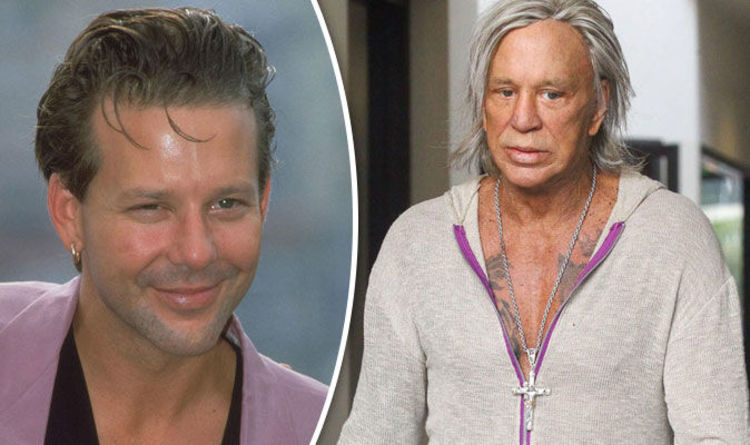
Mickey Rourke, a name synonymous with both cinematic brilliance and Hollywood’s tumultuous glamour, is often remembered for his remarkable comebacks and transformative roles. But to truly understand the man behind the fame, it’s essential to look back at Mickey Rourke young—his formative years, early ambitions, and the experiences that shaped his future in the entertainment industry. Before he became the brooding, unforgettable figure in films like 9½ Weeks and The Wrestler, Rourke’s youth was a tapestry of challenges, determination, and the early signs of his magnetic persona.
Born Philip Andre Rourke Jr. on September 16, 1952, in Schenectady, New York, Mickey grew up in a working-class family that faced its share of difficulties. His parents divorced when he was young, which led to periods of instability and Mickey Rourke Young transitions between households. Despite these challenges, Rourke’s early life was marked by a sense of resilience. He often cited his upbringing as a major influence on his later work, attributing much of his ability to portray complex, flawed characters to the early exposure to life’s harsh realities. Even as a child, he exhibited an undeniable charisma that hinted at his future stardom.
Rourke’s youth was also defined by his involvement in sports and physical activity. Boxing played a significant role in his early development. Starting as a teenager, Rourke trained rigorously, demonstrating a natural talent and discipline that later influenced both his acting career and personal life. His boxing experience would come full circle decades later when he returned to the ring professionally, blending his athletic prowess with his public persona. This combination of vulnerability and toughness became a defining trait, evident even in his earliest public appearances and auditions.
Education, while not the central focus of his young life, provided Mickey with some exposure to performance arts. He briefly attended Tisch School of the Arts at NYU, where he honed his acting skills and immersed himself in theater. This period was crucial as it introduced him to professional acting and allowed him to refine the skills that would later make him a cinematic icon. His early experiences in New York’s artistic circles cultivated a unique blend of streetwise toughness and emotional depth—a balance that became the cornerstone of his acting style.
The Formative Years: Dreams and Early Struggles
Mickey Rourke’s teenage and early adult years were a mix of ambition, exploration, and struggle. Moving between New York and Florida, he began chasing the dream of becoming an actor while simultaneously navigating the challenges of adolescence. During these years, Rourke was often described as rebellious yet introspective, someone who could charm a room yet carry a quiet intensity. Friends and acquaintances from this period often recall his natural charisma and determination, traits that would later become invaluable in Hollywood.
In his late teens, Rourke faced the realities of pursuing acting in a competitive environment. He took small roles in theater productions Mickey Rourke Young, commercials, and independent projects, each offering him incremental experience and exposure. These early attempts, though modest, were critical in shaping his understanding of the entertainment industry. They taught him not only the craft of acting but also the resilience needed to endure rejection—a lesson he would come to rely on during his career’s ups and downs.
Boxing remained a consistent thread in his life during this period. The discipline required for the sport helped Rourke develop a strong work ethic, focus, and confidence. Beyond physical training, boxing also provided him with a psychological edge—a way to confront challenges head-on. Many fans and critics argue that this early immersion in competitive sports influenced his acting style, often characterized by intense physicality and raw emotional expression. For young Rourke, the boxing ring was as much a training ground for life as it was for athletics.
Despite the turbulence of his early years, Rourke’s young adulthood was filled with artistic curiosity and experimentation. He explored various aspects of performing, from stage acting to film, developing a versatility that would define his career. His early struggles, while daunting, laid the foundation for his later success. By the time he moved to Los Angeles to pursue acting professionally, Rourke was equipped with not only talent but also a deep Mickey Rourke Young understanding of perseverance—a combination that would make him both revered and enigmatic in Hollywood circles.
Breakthrough Beginnings: Young Mickey Rourke in Hollywood
Mickey Rourke’s move to Los Angeles marked the official beginning of his professional career, but the journey from obscurity to recognition was far from easy. In the late 1970s, he began landing small television roles and bit parts in films. These early projects allowed him to understand the nuances of screen acting, contrasting with his theater experience in New York. It was during this period that Rourke’s intense dedication and commitment to authenticity in his craft started to stand out.
His early work included appearances in films like 1941 (1979) and minor television spots, where his natural presence made him memorable even in limited screen time. Directors noted his ability to convey complex emotions subtly, a skill often difficult for actors at the start of their careers. Rourke’s youthful looks, rugged charm, and raw intensity distinguished him from other young actors of the era, earning him attention in casting circles and slowly Mickey Rourke Young building his reputation in Hollywood.
By the early 1980s, Mickey Rourke was recognized as a rising star, blending both mainstream appeal and indie credibility. Films such as Diner (1982) and Rumble Fish (1983) showcased his versatility and ability to embody multifaceted characters. These roles were pivotal in establishing him as a serious actor capable of carrying both commercial and artistic projects. His youthful energy, combined with an undercurrent of emotional complexity, became his signature style, captivating audiences and critics alike.
Rourke’s young Hollywood years were also characterized by experimentation with his public image. Unlike many peers who conformed to studio-driven Mickey Rourke Young expectations, Mickey maintained a distinctive persona that balanced vulnerability with rebellion. This independence sometimes led to clashes with industry figures but also cemented his reputation as an actor unwilling to compromise authenticity for popularity. These formative choices in his early career would later define the trajectory of his cinematic life, making him one of the most intriguing figures of his generation.
Influences and Inspirations: Shaping the Young Rourke
Understanding Mickey Rourke young requires an exploration of the people and experiences that influenced him. From family dynamics to mentorship in acting and boxing, various factors contributed to his development as both an individual and performer. One of the key influences was his early exposure to cinema and literature, which instilled a sense of narrative and character awareness. He was inspired by classic Hollywood actors, as well as by method actors who embraced emotional honesty and complexity, molding his approach to roles.
Rourke also drew significant influence from his peers and mentors in theater and film. Working in New York’s vibrant artistic circles introduced him to diverse acting techniques and philosophies, enriching his understanding of human behavior and expression. These experiences fostered a keen observational skill, allowing him to translate subtle emotions onto the screen with authenticity and depth. For young Mickey, every interaction and experience became material for his craft—a trait that would define his performances throughout his career.
Boxing, again, cannot be understated as a source of influence. The sport provided structure, discipline, and resilience, qualities that would permeatem Mickey Rourke Young both his personal life and acting. Moreover, the physicality of boxing informed his portrayal of characters, often lending a raw, visceral energy that became his trademark. Rourke’s ability to integrate real-life skills into his acting approach set him apart from contemporaries, allowing him to deliver performances that felt grounded and intensely human.
Finally, Mickey’s youthful experiences with struggle, rejection, and self-discovery shaped his worldview and emotional range. The challenges he faced in adolescence and early adulthood—family instability, professional uncertainty, and personal conflicts—provided him with a reservoir of real emotions to draw from in his performances. This authentic emotional wellspring became the hallmark of his acting style, explaining why even in his youth, Mickey Rourke exuded a presence that was both captivating and unforgettable.
Conclusion: The Legacy of Young Mickey Rourke
Looking back at Mickey Rourke young, it’s clear that his early years were instrumental in forging the actor and person we know today. From a challenging childhood to formative experiences in boxing and acting, every aspect of his youth contributed to his resilience, charisma, and artistic authenticity. These years laid the foundation for a career marked by both brilliance and controversy, showcasing a man who consistently navigated the delicate balance between personal integrity and professional ambition.