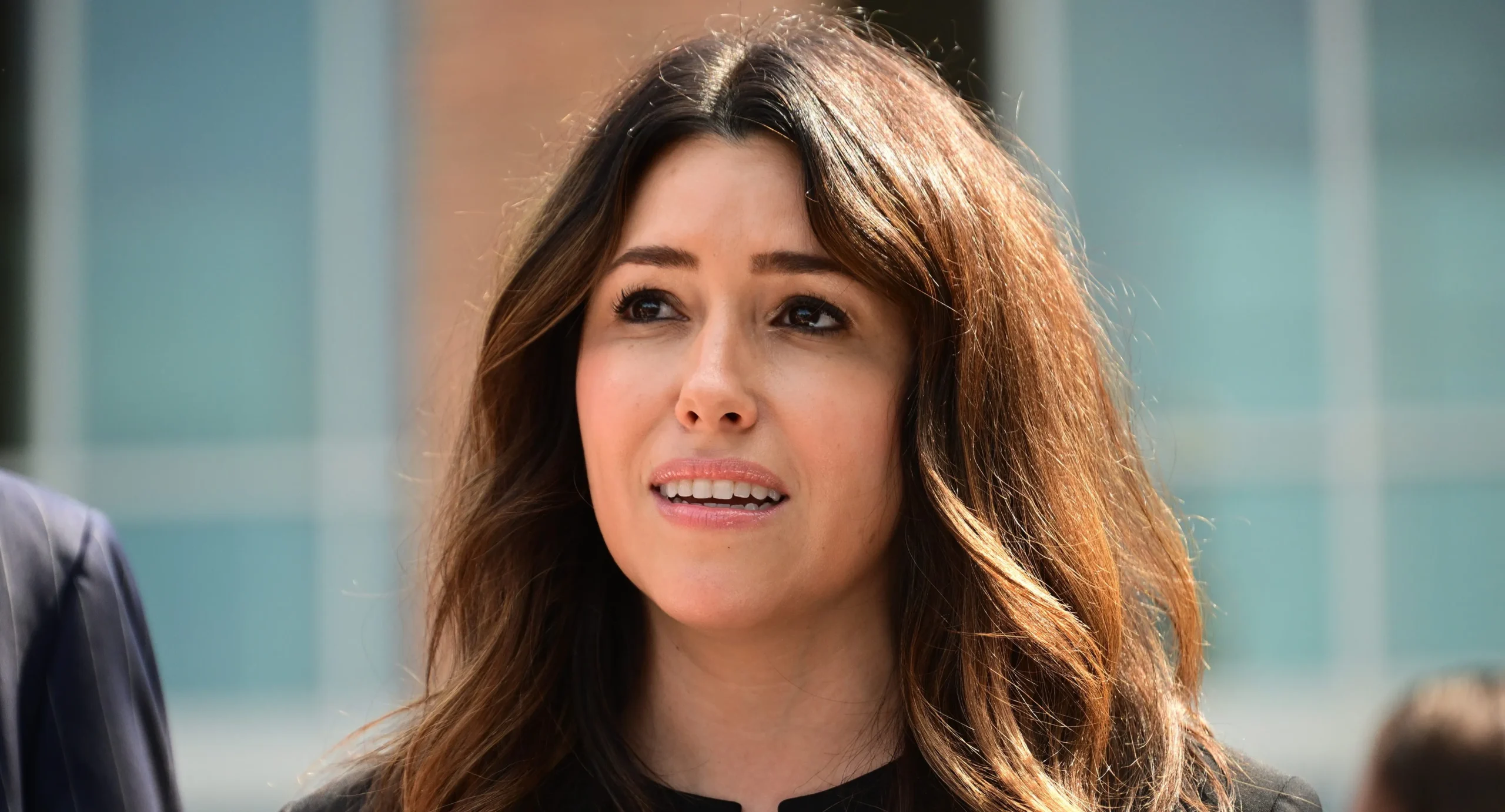
Introduction to camille vasquez
Camille Vasquez didn’t simply appear overnight in the middle of a high-profile trial, ready to spar with seasoned attorneys and take over social media. Her story began in a household that valued hard work, education, and personal responsibility. Born to immigrant parents, she grew up observing firsthand what dedication and sacrifice look like. Many reports describe her family as supportive and grounded, the kind of environment that pushes a child toward ambition without demanding it artificially. That upbringing seems to have molded her into someone who approaches her career both with passion and humility — a balance surprisingly rare in high-stakes legal circles.
Growing up in California, Vasquez excelled academically early on. Education wasn’t framed merely as a requirement but as a gateway to influence, opportunity, and service. Her early teachers described her as confident, meticulous, and outspoken — qualities that would later define her approach in the courtroom. Those formative years taught her to see debate not as conflict but as a chance to dissect ideas, clarify truth, and advocate fiercely. That ability to remain calm while examining competing perspectives is one of the core reasons she became so memorable during major trials.
Her heritage also contributes to her approach to law. As a first-generation American of Latin descent, she stands at the intersection of dual identities — belonging fully to the American legal tradition yet deeply aware of communities who struggle to see themselves represented in prestigious spaces. Vasquez has always acknowledged how her parents’ resilience and ambition shaped her worldview. In many ways, her later rise represented more than personal achievement; it symbolized a victory for families who hope their children can one day rewrite what success looks like.
2. Education and the Road to Law
Before the world ever learned her name, Camille Vasquez was on a steady, determined path toward legal expertise. She attended the University of Southern California, a prestigious institution that has produced countless influential leaders. Rising through the ranks academically, she earned a Bachelor of Arts in Communication and Political Science — a pairing that would foreshadow her future professional strengths. Communication trained her to articulate position, tone, and persuasion; political science grounded her in policy, systems, and societal behavior.
Graduate school brought the next major milestone: Southwestern Law School, where she earned her Juris Doctor degree. Law school is notorious for its intensity — a three-year marathon of case law, pressure-cooker deadlines, and constant intellectual competition. Vasquez thrived in that environment, demonstrating precision in writing, sharp reasoning skills, and most importantly, a gift for understanding people. Lawyers often talk about law as if it’s purely logic, but courtroom success depends equally on emotional intelligence. Clients need to feel heard, juries need clarity, and judges need trust. Vasquez built that balance step-by-step, case-by-case.
While academic achievements laid the groundwork, her real education came in the years that followed. Early in her career, she worked inside rigorous litigation environments where cases moved quickly and expectations were steep. Every legal profession has a proving ground, and for Vasquez it was the everyday grind — drafting filings, consulting experts, and developing strategies that never make headlines. By the time she entered national consciousness, she wasn’t “emerging” — she had already sharpened every tool she needed.
3. Breaking Out at Brown Rudnick
Camille Vasquez joined Brown Rudnick LLP, a respected international law firm known for its litigation practice, and her rise within the firm was anything but accidental. Litigation demands a distinctive personality — persistent, persuasive, and thick-skinned — and Vasquez possessed that combination effortlessly. Colleagues describe her as detail-oriented yet adaptive, a strategist who can shift course instantly without losing control of a narrative. Those are not traits you acquire overnight; they are the product of years in the trenches.
At Brown Rudnick, Vasquez specialized in plaintiff-side defamation representation, a niche that requires a unique understanding of media dynamics. Defamation cases are inherently combative — they ask lawyers to argue not only about what happened, but what was said, perceived, and interpreted. Words, statements, reputations, and public reaction all become legal battlegrounds. Vasquez proved she could handle the nuance. The firm trusted her with high-stakes, high-pressure files long before cameras ever entered the courtroom.
Her work ethic also stood out. Litigation rarely respects work-life boundaries; nights, weekends, and early mornings blur together when a deadline approaches. Vasquez developed a reputation for commitment that, according to insider accounts, bordered on relentless. She wasn’t afraid to take ownership of the unglamorous parts of the profession — document reviews, deposition preparation, witness rehearsals — because she knew those details separate the good from the exceptional. That consistency led her to one of the most watched legal moments in recent history.
4. The Depp-Heard Trial: Where Skill Met Spotlight
The trial between actor Johnny Depp and Amber Heard thrust Camille Vasquez into the global spotlight, transforming her from a respected litigator into a household name. Whether viewers watched courtroom streams casually or followed week-by-week breakdowns on social media, one thing became clear: Camille Vasquez was a commanding presence. She asked tough questions, maintained control during cross-examinations, and navigated emotionally charged testimony with steadiness that left an impression far beyond legal circles.
Her cross-examination of Heard, in particular, turned into a defining professional moment. Millions of viewers witnessed Vasquez press for clarity, challenge inconsistencies, and maintain composure even when the courtroom grew tense. There was no theatrical grandstanding — only sharp strategy grounded in facts and timing. The public praised her as articulate, fearless, and prepared down to every last line of questioning. For many, she became a symbol of precision and poise under pressure.
What may have surprised Vasquez the most was how the world reacted outside the courtroom. Social media turned her into a cultural figure. Memes, edits, fan accounts, and large-scale admiration spread across platforms. Suddenly, reporters asked about her background, career path, and even personal life. Few attorneys receive that type of unsolicited fanfare, and even fewer handle it with the grace she demonstrated. Vasquez repeatedly stressed that the trial wasn’t about her — it was about advocacy, evidence, and justice. Yet the impact on her life and career was undeniably transformational.
5. Rising Fame and Its Complications
Public attention is a double-edged sword, especially for someone trained to operate behind legal curtains rather than in front of a spotlight. Camille Vasquez found herself fielding interviews, managing online narratives, and becoming a topic of conversation for people far outside the usual legal audience. While admiration was overwhelming, fame also brought rumors and speculation — an unfortunate reality of the digital age. Some tried to sensationalize her professionalism, attach personal storylines, or twist courtroom moments into clickbait. To her credit, Vasquez remained grounded and disciplined in response.
Her handling of media demonstrated a lesson many public figures struggle with: control what you can, ignore the noise, focus on the work. Even with her sudden celebrity status, she never abandoned the central message that her career was built on advocacy and service, not stardom. That attitude endeared her even more to observers who valued humility in a world that rewards spectacle. Whether she appeared on talk shows or gave official statements, her tone remained measured and respectful.
The experience also highlighted a broader cultural conversation — why a female attorney commanding a courtroom became such a viral fascination. For many women in law, Vasquez’s visibility offered something more meaningful than entertainment: she embodied possibility. Watching her succeed on a global stage shattered lingering stereotypes about what leadership looks like in litigation. She showed the world that strength, clarity, and empathy are not mutually exclusive qualities. Fame may have been accidental, but representation was powerful.
6. Beyond the Headlines: Professional Philosophy
Camille Vasquez’s legal philosophy has emerged gradually through interviews, public statements, and of course, her courtroom strategy. At her core, she approaches litigation as storytelling — not fiction, but structured narrative supported by evidence. Every legal case has a timeline, characters, motivations, and pivotal turning points. Vasquez excels at organizing those elements in a way that resonates with judges and juries. Her skill lies in refining complex details into clear takeaways without sacrificing nuance or truth.
Her approach prioritizes preparation, perhaps above everything else. Preparation doesn’t simply mean reading documents; it means anticipating counterarguments, mapping case structure backward, and understanding human behavior well enough to know where a testimony may fracture. Observers repeatedly noted that Vasquez seemed three steps ahead inside the courtroom. That confidence didn’t arise spontaneously — it was the direct result of comprehensive mastery over the facts and narrative flow.
She also embodies an advocacy style grounded in respect. Even when confronting opposing witnesses, she remained professional rather than aggressive for spectacle’s sake. That balance is striking, especially within adversarial systems where attorneys sometimes lean on volume instead of discipline. Vasquez demonstrates that persuasion is not measured by how loud one speaks, but by how precisely one structures an argument. Her courtroom demeanor serves as a reminder that authority and grace can coexist powerfully.
7. Life After Viral Fame
Following the trial, Camille Vasquez embraced new opportunities without straying from her roots. Her promotion to partner at Brown Rudnick was announced months after the courtroom buzz — a rare accomplishment for someone her age. It signaled the firm’s recognition of her capability, long before cameras ever pointed in her direction. She also began offering commentary on legal cases through major news outlets, sharing insight not from sensationalism but from refined experience.
Media and law began intertwining as she accepted roles bridging both fields — offering legal analysis on broadcast platforms, attending conferences, and lending her expertise to conversations about defamation, public reputation, and legal ethics. Yet she repeatedly reinforced that her long-term goals remained in practice, not performance. She wasn’t chasing celebrity; her strength was, and still is, legal advocacy.
This next chapter of her career showcases evolution rather than reinvention. Fame didn’t tempt her away from the discipline that built her; instead, it expanded her reach and sharpened her platform. People now look toward her not just as “the lawyer from that trial,” but as a legal mind with perspective, professionalism, and staying power. That’s rare — and it speaks to how thoroughly she earned her success.
8. Representation, Legacy, and Cultural Impact
Camille Vasquez’s ascent means more than a personal triumph. She has become an aspirational figure for countless young people — especially women — considering a career in law. Visibility matters. Seeing someone with her background, composure, and authenticity thrive at the highest levels quietly expands the boundaries of who belongs in prominent legal spaces. Representation isn’t only about demographics; it’s about opening doors that others may fear are locked.
Her impact also touches on pop culture and the evolving relationship between media and law. She arrived in a moment when livestreamed trials blurred lines between legal process and entertainment. In that environment, Vasquez became a symbol of integrity — someone who handled unprecedented public scrutiny without compromising professional discipline. She reminded viewers that legal practice, even when televised, is fundamentally about truth-seeking.
What her legacy ultimately becomes remains open, but the foundation is solid. Whether she continues her career in high-profile litigation, shifts into legal leadership roles, or even influences reform in how defamation cases are handled, her trajectory is one worth watching. She is proof that excellence attracts opportunity — and that preparedness enables success when opportunity arrives unexpectedly.
Conclusion:
Camille Vasquez’s rise is a rare story — part preparation, part timing, part cultural phenomenon. Yet the overwhelming takeaway isn’t the viral fame or the media spotlight. It’s the years of work behind it: the late nights, careful research, disciplined strategy, and unshakeable belief in the power of advocacy. Her story resonates because it feels earned.
From her upbringing in a hardworking family to her ascent through competitive academic and legal environments, Vasquez exemplifies how persistence and skill intersect. The Depp-Heard trial simply provided a stage; her performance reflected everything she had already become behind the scenes. Today, she stands as a reminder that professionals can still surprise the world, that expertise can command attention, and that composure can become a quiet form of influence.
Camille Vasquez is no longer just a name trending across platforms. She’s a defining figure in modern litigation, a representative of underrecognized communities, and a benchmark for young attorneys who hope to follow a similar path. Whether or not she ever sought the spotlight, she has left a permanent mark on the public imagination — and her story is still unfolding.