Introduction to honor criswick
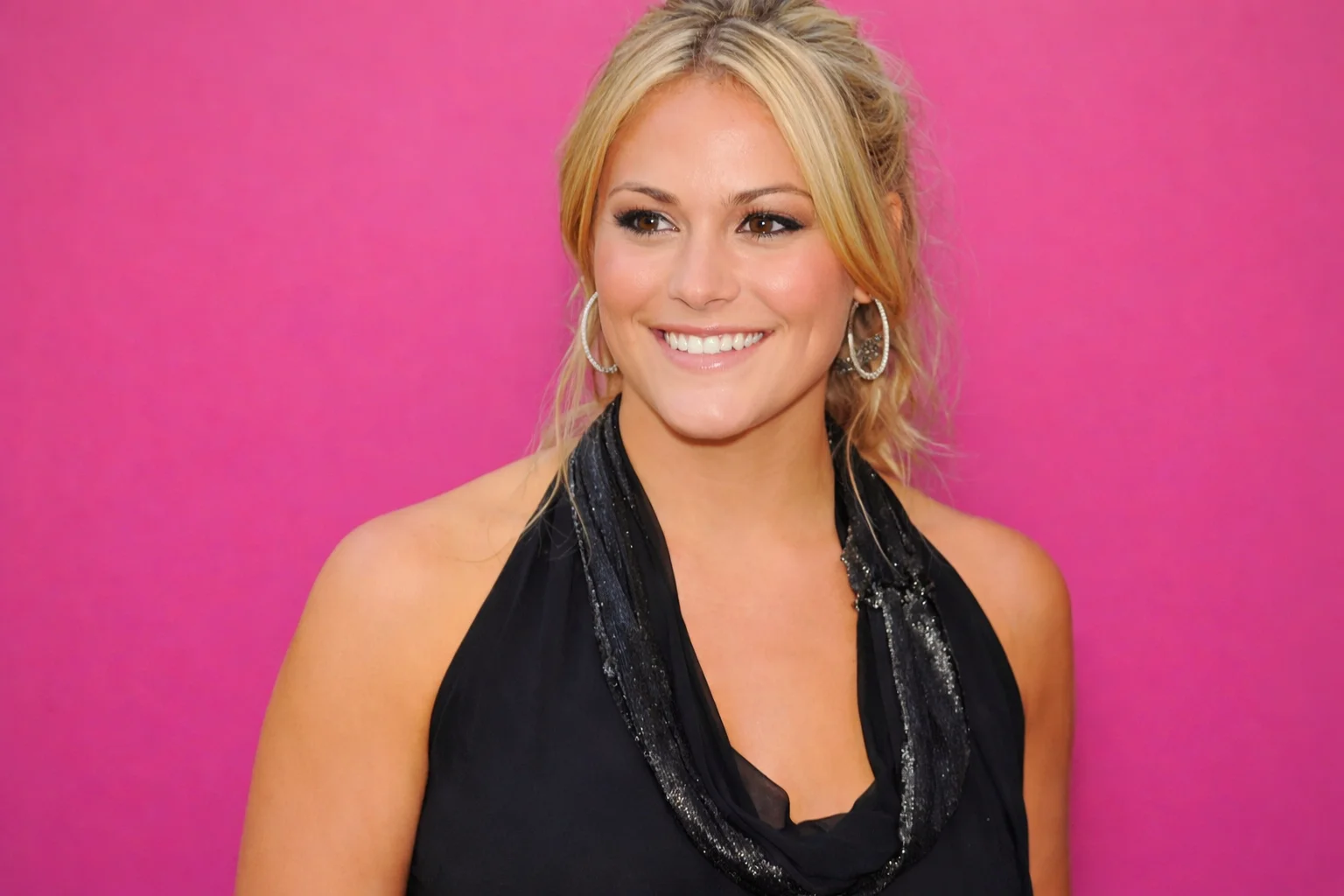
Honor Criswick stands out in British meteorology as a rising expert who has successfully blended rigorous scientific training with clear, engaging public communication. From her early academic excellence to her current role as an operational meteorologist and weather presenter, Criswick represents a new generation of science communicators who make complex weather systems accessible to honor criswick everyday audiences. What makes her journey fascinating is not only her professional achievements but also the way she has managed to shape her public persona with integrity, expertise, and relatable communication.
This comprehensive article explores her life, education, career progression, broadcasting style, public engagement, and broader influence on meteorology and science communication.
1. Early Life and Academic Foundation
A Passion for the Atmosphere Begins
From a young age, Honor Criswick demonstrated curiosity about the natural honor criswick world, particularly the forces that shape our weather and climate. While many details of her early life remain private, her academic choices clearly reflected a deep interest in environmental systems and atmospheric science — a foundation that would define her professional path.
Her decision to pursue higher education in geography and subsequently meteorology wasn’t accidental; it stemmed from genuine intellectual curiosity and a desire to understand Earth’s processes on a deeper level. Whether studying cloud formations or global climate trends, Honor’s early learning years were marked by a consistent focus on connecting theoretical knowledge with real-world environmental behaviors.
University of Salford: Building a Scientific Base
Honor Criswick’s undergraduate studies at the University of Salford were honor criswick crucial in shaping her scientific perspective. Here, she pursued a Bachelor of Science degree in Geography, graduating with First-Class Honours — an achievement that underscores both her academic dedication and her grasp of physical systems, spatial relationships, and environmental dynamics.
Geography isn’t just about reading maps; it involves understanding the interplay between the atmosphere, land, and human activity. Through this comprehensive discipline, Honor gained an interdisciplinary understanding of how geographic and atmospheric systems interact — knowledge that would deeply inform her later specialization in meteorology.
MSc in Applied Meteorology and Climatology at the University of Birmingham
Following her strong undergraduate performance, Honor continued her honor criswick education at the University of Birmingham, earning a Master of Science (MSc) in Applied Meteorology and Climatology. This postgraduate degree is highly respected and known for its rigorous scientific focus and practical forecasting components — preparing students for real world meteorological analysis.
At Birmingham, Honor’s training expanded beyond theory. She engaged with real atmospheric data, numerical weather prediction models, and complex climatological datasets. Her academic work included understanding atmospheric dynamics, thermodynamics, climate variability, and the interpretation of weather models — all of which are indispensable skills in professional forecasting.
Academic Excellence as Professional Preparation
Honor’s academic trajectory — from a strong undergraduate foundation to honor criswick specialized meteorological training — reflects a deliberate and disciplined approach to building expertise. Rather than relying on surface-level knowledge, she equipped herself with a deep understanding of atmospheric science, mathematical modeling, and physical processes that would later enable her to interpret and communicate complex weather scenarios with confidence and accuracy.
2. Early Career at the Met Office
Joining the UK’s National Weather Service
In 2019, Honor Criswick made a pivotal professional move honor criswick by joining the UK Met Office, the United Kingdom’s official national weather service — an institution responsible for producing weather forecasts, climate data, guidance, and warnings across multiple sectors including aviation, emergency response, transportation, and general public safety.
Her first role at the Met Office was as a Meteorological Technician — an entry-level but highly practical position where she applied her academic training to operational work. In this role, she analyzed real weather data, observed patterns, interpreted model outputs, and supported forecasting teams in delivering accurate and timely information.
Foundation Skills: Data, Models, and Observation
Meteorological technicians are the backbone of forecasting honor criswick operations. Honor’s work involved:
- Weather data analysis from satellites, radar, and ground stations
- Interpreting weather models to anticipate short- and medium-range atmospheric changes
- Assisting with forecast production, including advising senior forecasters
These tasks may sound technical, but they are foundational to the art and science of weather prediction. They demand meticulous attention to detail, a solid understanding of atmospheric behavior, and the ability to translate complex model outputs into actionable insights — all of which Honor handled adeptly.
Real-World Meteorology in Action
Working at the Met Office also meant being deeply involved in events that have significant societal impact — from monitoring severe storms and flooding risk to tracking temperature extremes. Honor developed both her technical skills and her situational awareness: forecasting isn’t just about numbers, it’s about how weather affects people, infrastructure, business operations, and safety.
This early period allowed her to bridge the gap between classroom meteorology and real-world application — a transition that many students find challenging but one in which Honor excelled.
3. Growth and Advancement Within the Met Office
Operational Meteorologist: A Natural Promotion
By January 2022, Honor had advanced to become an Operational Meteorologist at the Met Office — a role that carries greater responsibility, autonomy, and visibility. This promotion wasn’t just a title change; it reflected her growing expertise, analytical capability, and readiness to take on complex forecasting duties.
As an Operational Meteorologist, her responsibilities broadened to include:
- Producing real-time weather forecasts for diverse sectors
- Assessing and interpreting multi-model ensembles for forecast certainty
- Issuing weather advisories and warnings when risks escalate
- Communicating weather information to key stakeholders
This role requires not only technical proficiency but also the ability to communicate clearly — with fellow scientists, with partner organizations, and indirectly with the public through media or advisory materials.
The Stakes Are Higher — and So Are the Skills
As part of her operational duties, Honor’s work had direct impacts on decision-making processes that affect safety and planning:
- Aviation operations rely on accurate forecasts for flight safety
- Agriculture depends on weather cues for planting and harvesting
- Emergency services coordinate responses during storms or floods
- General public safety benefits from clear warnings and reliable forecasts
In this phase of her career, Honor wasn’t just analyzing data — she was responsible for transforming that data into forecasts that literally help people plan, prepare, and protect themselves. This kind of impact is what defines professional meteorology.
The Importance of Professional Meteorology
Meteorology at this level isn’t simply about predicting rain or sunshine. It’s about understanding atmospheric dynamics, interpreting model outputs under conditions of uncertainty, and evaluating the implications of atmospheric trends. Honor’s promotion signified that she had mastered those skills and was trusted to deliver forecasts that society depends on.
4. Transition to Weather Broadcasting
Moving from Behind the Scenes to On-Camera Forecasting
In October 2024, Honor made a significant career decision: she transitioned into weather broadcasting while maintaining her meteorological work within the Met Office. This move marked her entry into public communication, appearing as a forecast presenter on major platforms including GB News and Channel 5 News.
For many meteorologists, broadcasting is a distinct skill — it requires not just scientific understanding, but the ability to present complex information clearly, confidently, and engagingly to a broad audience.
What Sets Honor Apart
Honor’s strength lies in her dual expertise:
- Scientific credibility from operational forecasting
- Communication skills that make weather understandable
Unlike presenters who rely solely on scripts, Honor draws from her deep knowledge of atmospheric data and forecasting principles. She breaks down technical concepts — such as jet stream behavior, pressure systems, or storm development — into explanations that viewers can grasp without losing scientific accuracy.
This approach reflects a shift in modern media: audiences no longer want just “the forecast”; they want context, explanation, and understanding.
Broadcasting Style: Clear, Calm, and Informative
Viewers have praised Honor for her presentation style — professional yet approachable. Her delivery is characterized by:
- Clarity — simplifying complex scenarios without dumbing them down
- Authority — informed by real forecasting experience
- Relatability — conversational tone that connects with audiences
Whether explaining a cold front or a period of unsettled weather, her approach stands out because it bridges science and everyday relevance.
Television weather presenting is often fast-paced and dynamic. Conditions can change rapidly, and presenters need to adapt in real time. Honor’s ability to remain composed and articulate, even during unexpected shifts, reflects both her preparation and her confidence in her knowledge.
Expanding Reach and Influence
By appearing on multiple platforms, Honor has expanded her reach beyond the traditional forecasting audience. Millions tune in for weather updates on national news shows, meaning her influence now extends to:
- Households planning daily activities
- Travelers checking conditions before journeys
- People seeking understanding during extreme weather
Her broadcasting role complements her scientific work, making weather science accessible, engaging, and relevant.
5. Communication Beyond Television
Social Media Presence
Honor is active on social media — particularly on Instagram under the handle @honorcrisweather — where she shares professional updates, weather insights, and explanatory content.
Her social strategy focuses on education over entertainment. She uses these platforms not for personal drama or celebrity lifestyle, but to:
- Explain weather patterns
- Provide forecasting insights
- Educate followers about meteorological concepts
This intentional focus reflects her professional priorities: empower, inform, and educate.
Bridging The Knowledge Gap
Social media allows Honor to reach diverse audiences — especially younger people who may not watch traditional television. Her posts often include visual explanations, brief lesson-style content, and behind-the-scenes glimpses of forecasting.
By meeting audiences where they are, she contributes to science literacy — helping people understand not only what the weather will be, but why it behaves the way it does.
Professional Engagement Online
Honor’s online presence is also an extension of her role as a science communicator. She often shares:
- Weather forecasting tips
- Data interpretation explanations
- Simplified descriptions of atmospheric phenomena
This dual role — operational meteorologist and public educator — enhances her credibility and broadens her impact, particularly for viewers and followers who are curious about weather science.
6. The Role Model: Women in STEM
Breaking Barriers in a Traditionally Male Field
Meteorology, like many STEM fields, has historically had gender imbalances. Honor Criswick’s visibility as both a scientist and presenter carries significance beyond her individual career.
Her success demonstrates that women can excel in technical science roles and communicate that science effectively to the public. This representation matters, especially for young women and girls considering careers in science, technology, engineering, and mathematics.
Seeing someone like Honor on national broadcasts and professional platforms sends an important message: scientific expertise and communication skills are both valued, and both are attainable for women in STEM.
Her career trajectory — from academic achievement to operational meteorology and media presence — serves as a roadmap for aspiring female scientists.
Mentorship Through Visibility
While Honor doesn’t position herself as a spokesperson or activist, her mere visibility serves as inspiration. Through her work, she provides an example of:
- Intellectual commitment
- Professional versatility
- Public engagement
This implicit mentorship is powerful — it expands the perception of what women in meteorology can achieve, and encourages broader participation.
7. Honor’s Influence on Public Weather Understanding
Why Science Communication Matters
In an age of rapidly changing weather and climate patterns, the public’s need for clear, scientific, trustworthy information has never been greater. Honor’s approach — grounded in real forecasting experience — helps demystify weather science in a way that reduces confusion and increases preparedness.
Her broadcasts and online content often emphasize not just what the forecast is, but:
- Why certain weather systems develop
- How weather tools and models work
- What uncertainties exist and why they matter
This deeper context fosters better understanding and empowers audiences to make informed decisions.
Making Meteorology Accessible
The difference between typical weather reports and Honor’s forecasting style is contextual depth. While most forecasts explain temperatures and conditions, Honor’s expertise enables her to add:
- Explanations of atmospheric dynamics
- Insights into long-range forecasts
- Practical implications for daily life
This level of communication helps audiences not just react to weather, but understand it.
Trust in Meteorological Information
Public trust in science — especially around climate and weather — is critical. Honor’s professionalism, consistency, and clarity help cultivate that trust. Unlike personalities who aim for viral attention or sensationalism, her focus remains on accuracy and clarity — reinforcing confidence in scientific forecasting.
8. Personal Life and Public Profile
Maintaining Professional Privacy
Despite her public work, Honor Criswick keeps her private life largely out of the spotlight. Her exact date of birth or personal details are not publicly disclosed — which suggests a deliberate boundary between her professional persona and personal world.
This choice reflects her focus on her career, expertise, and public mission rather than on celebrity or personal disclosure.
Estimated Age and Career Timeline
Based on her academic and professional timeline, public sources estimate Honor to be in her late 20s to early 30s as of 2025 — a remarkable accomplishment given the depth of her professional experience and visibility at a relatively young age.
A Career in Progress
Her journey continues to evolve. Whether through extended broadcasting roles, public education initiatives, or future collaborations, Honor’s career is dynamic — shaped by her foundational commitment to meteorology and her growing influence as a science communicator.
9. Looking Forward: Future Prospects and Broader Impact
Expanding Professional Horizons
Honor Criswick’s journey so far shows no signs of slowing. Her combination of operational meteorology, broadcasting experience, and engagement with public audiences places her in a unique position to shape the future of weather communication.
Potential future directions include:
- Expanded television roles
- Educational outreach programs
- Climate science advocacy and communication
- Collaboration with public safety organizations
Her ongoing presence in both meteorological and media circles ensures that she will continue to influence how weather is understood and communicated.
Contribution to Climate Literacy
As climate patterns evolve and extreme weather becomes more frequent, effective communication is critical. Honor’s ability to explain data, uncertainty, and atmospheric science will be increasingly vital in helping the public interpret climate-related information.
Her role — at the intersection of science and communication — aligns with a broader need for trusted voices that can guide public understanding and resilience.
Conclusion:
Honor Criswick’s career is a powerful example of how scientific expertise and communication skills can be combined to create meaningful public impact. From her early academic achievements to her operational work at the UK Met Office, and on to her role as a trusted weather presenter, Honor embodies the evolving role of meteorologists in the modern world.
Her journey shows that meteorology is more than just predicting rain; it’s about interpreting complex systems, communicating them responsibly, and empowering the public with understanding. As a woman in STEM, a professional communicator, and a dedicated scientist, Honor Criswick’s influence will likely continue growing — shaping not only weather forecasting but public engagement with science itself