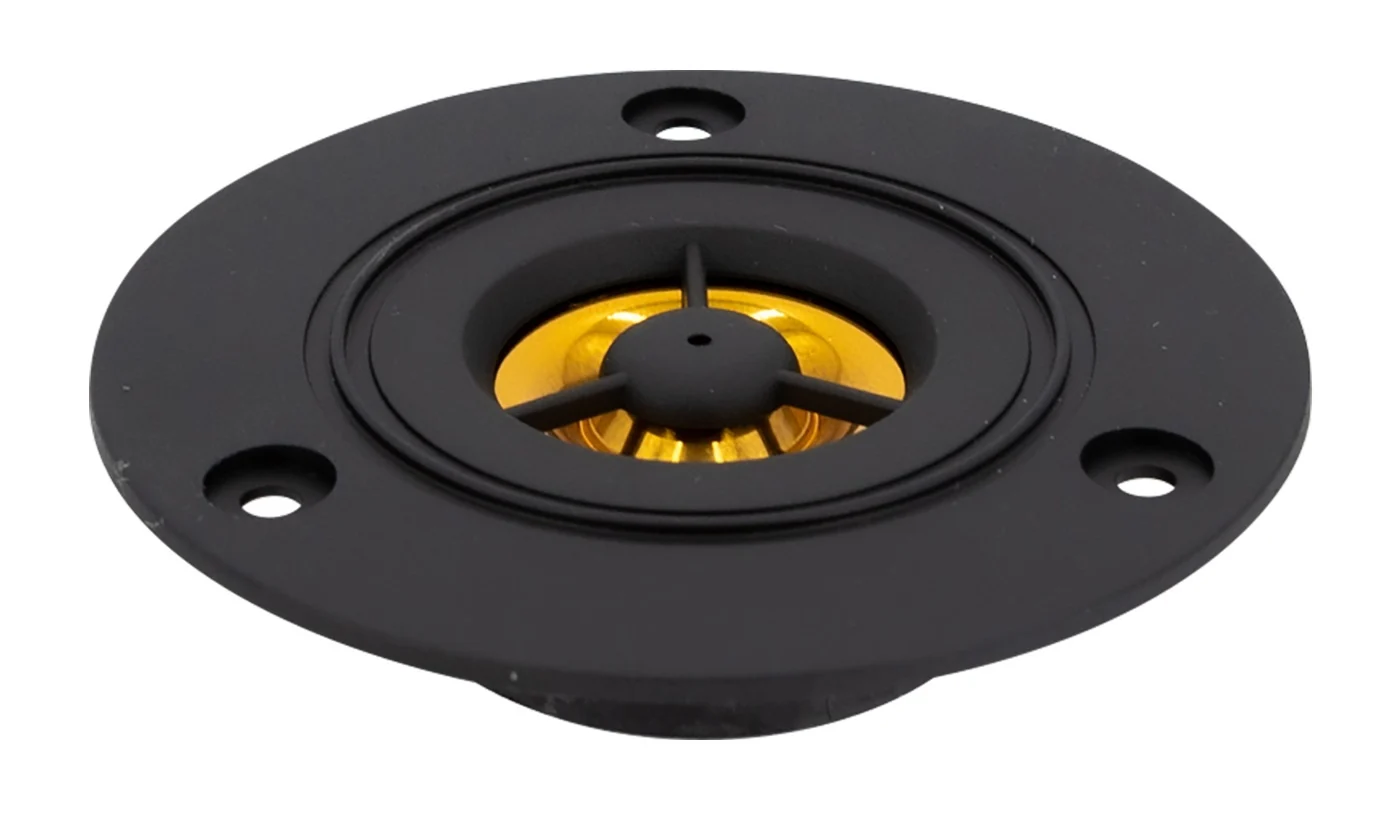
Introduction to tweeter
When people talk about audio quality, they usually jump straight to bass. Deep lows get all the love. But anyone who’s spent real time with high-quality sound systems knows that clarity lives on the other end of the spectrum. That’s where the tweeter comes in. A tweeter is a specialized type of loudspeaker driver designed to reproduce high-frequency sounds, typically ranging from around 2,000 Hz up to 20,000 Hz or even higher.
Without a tweeter, music feels dull and lifeless. Vocals lose their sparkle, cymbals sound flat, and details like string plucks or ambient effects disappear. You may not consciously notice a tweeter when it’s working well, but you’ll immediately notice when it’s missing. High frequencies are what give audio its sense of realism, air, and space.
In this article, we’re going to break down tweeters from every angle. We’ll cover how they work, the different types available, how they’re used in home audio, car audio, and professional systems, and what actually matters when choosing one. Whether you’re an audio enthusiast or just someone who wants better sound, this guide has you covered.
Understanding How a Tweeter Works
At its core, a tweeter works on the same basic principle as any other speaker driver: it converts electrical signals into sound waves. However, what makes a tweeter special is its size, materials, and speed. High-frequency sounds require extremely fast movement, and that means the tweeter’s diaphragm must be lightweight and responsive.
Most tweeters use a small dome or ribbon that vibrates rapidly when an electrical signal passes through a voice coil. These vibrations push air molecules back and forth, creating sound waves that our ears interpret as treble. Because the movements are so fast and precise, even small imperfections in design or materials can affect sound quality.
Another critical component in how tweeters work is the crossover. A crossover is an electronic filter that ensures only high-frequency signals reach the tweeter. Low frequencies are routed to woofers or subwoofers instead. This division of labor protects the tweeter from damage and ensures each driver operates in the range it handles best.
Different Types of Tweeters and Their Characteristics
Not all tweeters are created equal. In fact, there are several distinct types, each with its own strengths, weaknesses, and ideal use cases. Understanding these differences can help you appreciate why certain speakers sound the way they do.
Dome tweeters are the most common type found in consumer audio products. They typically use soft materials like silk or fabric, or harder materials like aluminum or titanium. Soft dome tweeters tend to produce a warmer, smoother sound, while metal dome tweeters offer more detail and brightness, sometimes at the expense of sounding harsh if poorly designed.
Ribbon tweeters and planar magnetic tweeters are more specialized. These use ultra-thin conductive ribbons suspended in a magnetic field, allowing for extremely fast response times. The result is incredible clarity and detail, especially in the upper treble range. However, they are usually more expensive and sensitive, which is why they’re often found in high-end or professional audio systems.
Tweeters in Home Audio Systems
In home audio, tweeters play a massive role in shaping the overall listening experience. Whether you’re using bookshelf speakers, floor-standing towers, or a full surround sound system, the tweeter is responsible for everything from crisp dialogue to realistic instrument separation.
A well-designed tweeter in a home speaker should blend seamlessly with the midrange driver. When this integration is done correctly, you don’t hear the tweeter as a separate sound source. Instead, the music feels cohesive and natural. Poor integration, on the other hand, can make treble feel detached or overly sharp.
Room acoustics also matter a lot when it comes to tweeters. High frequencies are more directional than low frequencies, meaning tweeter placement and speaker angle can significantly affect what you hear. This is why many high-end speakers position tweeters at ear level and carefully shape their dispersion patterns for optimal sound staging.
The Role of Tweeters in Car Audio Systems
Car audio presents a unique set of challenges, and tweeters are right at the center of them. Unlike a living room, a car interior is small, reflective, and asymmetrical. Tweeters help overcome these challenges by restoring clarity and detail that would otherwise get lost.
In car audio setups, tweeters are often mounted on dashboards, A-pillars, or door panels to bring high-frequency sound closer to ear level. This improves imaging and makes vocals and instruments sound more natural. Without tweeters, car speakers tend to sound muddy, especially at higher volumes.
Another important factor in car tweeters is durability. They need to withstand heat, vibration, and long hours of use. High-quality car tweeters are built with robust materials and protective crossovers to ensure consistent performance over time, even in harsh conditions.
Professional and Studio Use of Tweeters
In professional audio environments like recording studios, tweeters are absolutely critical. Engineers rely on accurate treble reproduction to make decisions about EQ, compression, and effects. A tweeter that exaggerates or hides certain frequencies can lead to poor mixes that don’t translate well to other systems.
Studio monitors often use highly refined tweeters designed for flat, neutral response. The goal isn’t to sound exciting, but to sound honest. Ribbon and air motion transformer (AMT) tweeters are especially popular in professional settings due to their precision and low distortion.
Live sound systems also depend on tweeters, though the focus shifts slightly toward projection and durability. Horn-loaded tweeters are commonly used in PA systems because they can project high frequencies over long distances without losing clarity, making them ideal for concerts and large venues.
Key Factors to Consider When Choosing a Tweeter
Choosing the right tweeter isn’t just about picking the most expensive option. It’s about matching the tweeter to your system, listening preferences, and environment. One of the most important factors is frequency response. A good tweeter should handle the high end smoothly without harsh peaks or sudden drop-offs.
Sensitivity is another key consideration. Tweeters with higher sensitivity produce more sound with less power, which can be beneficial in certain setups. However, they must be properly matched with other drivers to maintain balance across the frequency spectrum.
Finally, build quality and materials matter more than many people realize. The diaphragm material, magnet strength, and even the housing design all influence how a tweeter sounds. A well-engineered tweeter will deliver consistent performance and remain reliable for years, making it a worthwhile investment.
Common Myths and Misunderstandings About Tweeters
One common misconception is that brighter sound always means better sound. In reality, an overly bright tweeter can cause listening fatigue and make music unpleasant over time. Quality treble should be detailed but smooth, enhancing the experience rather than dominating it.
Another myth is that all tweeters sound the same. While it’s true that differences can be subtle, experienced listeners can easily distinguish between various tweeter designs and materials. These differences become even more noticeable in high-resolution audio systems.
Some people also believe tweeters are fragile and easy to damage. While it’s true that they’re more delicate than woofers, modern tweeters are far more robust than many assume. With proper crossover design and sensible listening levels, a quality tweeter can last for decades.
The Future of Tweeter Technology
Tweeter technology continues to evolve alongside advancements in materials science and digital audio processing. Manufacturers are constantly experimenting with new diaphragm materials, including advanced composites and ultra-light alloys, to improve speed and reduce distortion.
Another exciting area of development is waveguide and dispersion design. Modern tweeters are being engineered to deliver more consistent sound across a wider listening area, making speakers sound better no matter where you’re sitting in the room.
As high-resolution audio becomes more mainstream, tweeters capable of reproducing ultra-high frequencies beyond human hearing are also gaining attention. While we can’t hear these frequencies directly, they can influence perceived sound quality by improving transient response and spatial detail.
Conclusion:
Tweeters may be small, but their impact on sound quality is enormous. They bring life, clarity, and realism to music, movies, and live performances. Without them, audio systems would feel incomplete and uninspiring.
Whether you’re setting up a home theater, upgrading your car audio, or building a professional studio, understanding tweeters gives you a huge advantage. You’ll be able to make smarter choices, appreciate subtle differences, and ultimately enjoy better sound.
In the world of audio, bass might grab attention, but treble earns appreciation over time. And at the heart of great treble is a well-designed tweeter doing exactly what it was built to do.