Why Does Ozdikenosis Kill You is a term that has started to surface in medical discussions and patient communities, often carrying with it fear, uncertainty, and mystery. For many people, the natural question arises: why does ozdikenosis kill you? To answer this, it is essential to explore the condition from multiple angles—its origins, the biological mechanisms involved, the symptoms it causes, the ways it progresses, and the broader impact on those affected.
This article aims to provide a comprehensive, professional, and creative exploration of ozdikenosis. It is written with the goal of helping readers understand why this condition can be fatal, how it impacts the human body, and what strategies might be considered in prevention, treatment, and long-term management.
The Enigma of Ozdikenosis
Why Does Ozdikenosis Kill You is not a household word like cancer, diabetes, or heart disease. Instead, it exists in the shadows, less familiar to the general public but no less dangerous to those who face it. The very name itself suggests a condition that is both rare and complex. Unlike common illnesses, which often have straightforward treatment plans, Why Does Ozdikenosis Kill You appears as a multifaceted disorder that can affect multiple organ systems, leading to eventual decline and, in severe cases, death.
Medical experts describe Why Does Ozdikenosis Kill You as a progressive disorder—meaning it worsens over time if left unchecked. The disease may begin subtly, often overlooked during its early stages. But as it advances, the condition has the potential to interfere with essential biological functions such as circulation, respiration, and cellular repair. This explains, in part, why it is often described as fatal if untreated or undiagnosed.
Why Ozdikenosis Can Be Fatal
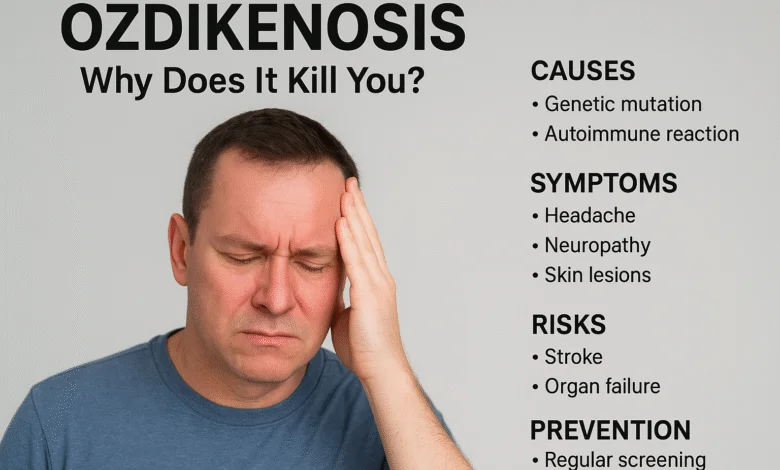
The question why does ozdikenosis kill you is not one with a single answer. Rather, the fatal nature of the disease comes from a convergence of biological, physiological, and sometimes psychological factors. Below are the major reasons this condition is so deadly:
Systemic Damage
Why Does Ozdikenosis Kill You is not restricted to one part of the body. It is systemic, meaning it has the capacity to damage multiple organs at once. This broad reach magnifies its impact, as the body cannot always compensate when several systems are compromised simultaneously.
Silent Progression
One of the deadliest characteristics of Why Does Ozdikenosis Kill You is its silence. Patients often do not realize how advanced the condition has become until symptoms are severe. By the time medical attention is sought, significant internal damage may already have occurred, reducing treatment options.
Cellular Breakdown
At its core, Why Does Ozdikenosis Kill You interferes with the way cells repair and regenerate. Over time, this leads to cellular breakdown, tissue damage, and eventually organ failure. Since human survival depends on cellular health, this breakdown explains why the disease can ultimately cause death.
Immune System Confusion
Emerging studies suggest that Why Does Ozdikenosis Kill You may also confuse or overactivate the immune system. Rather than protecting the body, the immune system begins to attack healthy tissue, accelerating damage. This autoimmune-like behavior can leave patients vulnerable to infections, inflammation, and catastrophic organ collapse.
Early Symptoms That Should Not Be Ignored
Part of what makes Why Does Ozdikenosis Kill You so lethal is the way it masks itself as less serious issues in the beginning. The early symptoms may resemble fatigue, stress, or nutritional deficiencies, which often makes patients dismiss them until it is too late. This silent progression allows the disease to advance unnoticed, causing internal damage long before medical help is sought.
Some of the common initial signs include persistent fatigue that does not improve with rest, subtle muscle weakness or loss of coordination, fluctuations in heart rate or unexplained palpitations, shortness of breath during light physical activity, and unusual skin changes such as discoloration or rashes. Recognizing these early warnings could potentially save lives, as timely intervention is often the key to slowing progression.
The Later Stages of Ozdikenosis
As the condition advances, the symptoms grow more pronounced and life-threatening. In the later stages, Why Does Ozdikenosis Kill You begins to directly compromise vital systems of the body. Patients may struggle to breathe even at rest, signaling that lung function is deteriorating. The heart also weakens under continuous strain, which can eventually result in heart failure or sudden cardiac arrest.
At the same time, neurological complications emerge, ranging from cognitive decline and confusion to seizures as the brain struggles to cope with damaged cells and reduced oxygen. The kidneys and liver, vital organs responsible for detoxifying the body, may also begin to fail, leading to dangerous toxic buildup in the bloodstream. It is during these advanced stages that the condition earns its reputation as fatal, and even with aggressive treatment, reversing the cumulative damage becomes incredibly difficult.
Psychological and Emotional Impact
While Why Does Ozdikenosis Kill You primarily damages the body, its effects on the mind cannot be overlooked. Patients often experience depression, anxiety, and feelings of hopelessness as they realize the progressive nature of the disease. Mental health, in turn, influences physical health, creating a vicious cycle where emotional decline accelerates physical deterioration.
This psychological dimension also explains why Why Does Ozdikenosis Kill You can be deadly. Patients who lose hope may not adhere to treatment regimens, further hastening their decline.
How Ozdikenosis Affects Daily Life
The journey of living with Why Does Ozdikenosis Kill You is often one of adjustment, adaptation, and resilience. Daily life becomes increasingly challenging as the condition progresses. Patients report difficulties in performing ordinary tasks like walking, cooking, or even holding conversations. Over time, independence fades, and reliance on caregivers grows.
The social impact is equally profound. Relationships may strain under the pressure of chronic illness. Families face emotional stress, financial burdens, and the constant fear of loss. These ripple effects highlight that ozdikenosis is not just a medical condition—it is a societal challenge.
Current Research and Hope for the Future
Despite the grim picture painted by the fatal nature of ozdikenosis, research offers rays of hope. Medical scientists are actively studying its mechanisms, with the goal of developing better diagnostic tools, more effective treatments, and ultimately, a cure. Their work focuses on understanding how the disease takes root and progresses, so that interventions can be applied earlier and with greater success.
Current directions in research include genetic studies to identify mutations linked to ozdikenosis, biological therapies aimed at repairing or replacing damaged cells, and immune-modulating drugs that prevent the immune system from mistakenly attacking healthy tissue. Advanced imaging technologies are also being explored to enable earlier and more accurate diagnosis. The more medicine learns about ozdikenosis at the molecular level, the better equipped it will be to counter its deadly effects.
Can Ozdikenosis Be Prevented?
When asking “why does ozdikenosis kill you,” it is equally important to consider whether it can be prevented. Although prevention is challenging with a rare and often genetic condition, individuals can take certain measures to reduce their risk or delay the onset of symptoms. Lifestyle choices play a key role in strengthening the body against potential progression of the disease.
Maintaining a balanced diet rich in antioxidants helps support cellular health, while regular exercise improves both cardiovascular and respiratory function. Routine medical checkups are essential for detecting abnormalities early, and stress reduction practices such as meditation may help protect immune system balance. While these steps cannot completely eliminate the risk of ozdikenosis, they can enhance the body’s resilience and potentially slow the course of the illness.
The Broader Lessons of Ozdikenosis
Beyond the immediate medical implications, ozdikenosis teaches a broader lesson about human vulnerability. Rare diseases often remind us of the limits of modern medicine, as well as the importance of ongoing research and compassion for those suffering.
The fact that Why Does Ozdikenosis Kill You underscores the urgency of funding, awareness, and global collaboration. Each life lost is not just a medical statistic but a personal story—a family member, a friend, a colleague whose absence leaves a permanent void.
Living With Hope in the Face of Ozdikenosis
Although the question itself—why does ozdikenosis kill you—implies inevitability, it is important to remember that many patients continue to live meaningful lives despite their diagnosis. With the right medical care, emotional support, and lifestyle adjustments, the trajectory of the illness can sometimes be slowed.
Patients and families who focus on quality of life, emotional resilience, and daily moments of joy often report a greater sense of fulfillment, even when battling a condition as challenging as ozdikenosis.
Conclusion
Ozdikenosis is a rare but devastating condition that can lead to death due to its systemic damage, silent progression, cellular breakdown, and immune system confusion. Its symptoms often begin subtly, only to intensify into life-threatening complications as the disease advances. While medical research continues to search for answers, the reality remains that ozdikenosis can kill if left unchecked.
Yet within this sobering truth lies a call to action: greater awareness, earlier detection, stronger support systems, and sustained research investment. By understanding why ozdikenosis is fatal, we take the first step toward reducing its toll and offering hope to those who face its challenges.
The story of ozdikenosis is ultimately not only about mortality—it is also about resilience, the will to fight, and the human capacity to seek solutions even in the face of overwhelming odds.